Connection / MARK GOUDIE
Listening beyond the answer
What becomes possible when we listen to understand, rather than prepare our reply?
During a conversation, we can be busy comparing, correcting or searching for advice. We hear a familiar phrase and assume we already know the experience behind it. The other person may still be trying to find the words.
Listening can mean leaving a little more space before we respond. Asking what someone means. Checking an assumption. We do not have to solve every difficulty to offer attention, and attention may reveal something our first answer would have missed.
EXPLORING THE IDEA
We hear what we recognise
Someone begins telling us what happened, and we’re already somewhere else. We’ve had a similar experience. We know what they should do. We’ve identified the problem before they’ve finished the sentence. The words are arriving, but the conclusion is already in place.
That can look like a helpful conversation from the outside. There are answers, advice and stories being exchanged. But the person may never have been heard. We’ve used their words as an entrance into what we already know, rather than an opportunity to understand something about their experience.
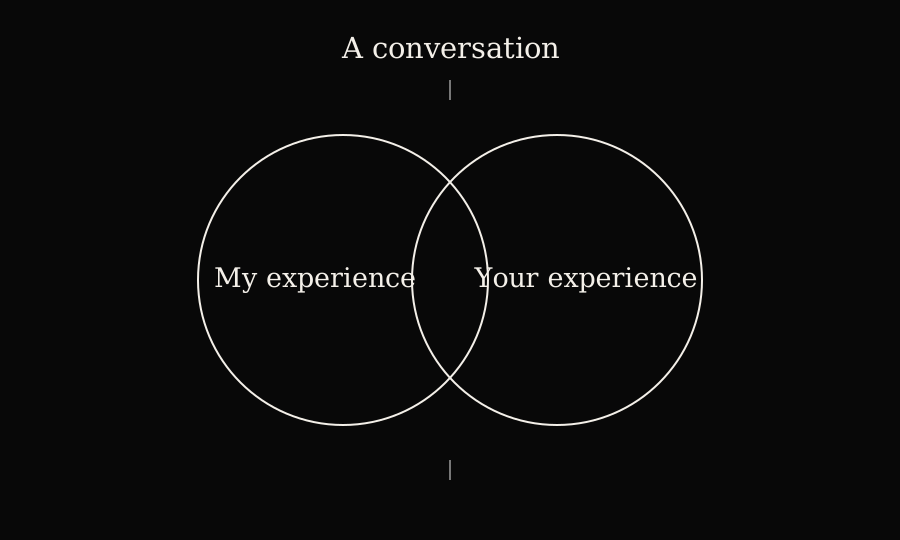
The familiar word hides a different life
Two people can use the word lonely and mean very different things. One has nobody around them. Another has people everywhere and no place to speak honestly. The same description doesn’t give us the same experience.
Listening means staying with the person long enough to discover that difference. We can ask what they mean. We can check the thing we think we understood. We can let them finish without making the pause our cue to take over. None of that requires us to agree with every explanation. It requires attention before judgement.
There is more than an answer here
When we rush to solve, we can miss what the conversation is doing. Someone is finding words for an experience. They’re hearing themselves say something they haven’t said before. An immediate instruction can close down that exploration, even when it comes from care.
There are times when clear advice is useful. There are also times when the most useful thing is to understand the actual problem before offering a solution. We can ask what the person needs from the conversation. We can notice the urge to prove that we know. The relationship changes when being present matters more than having the best reply.
We can’t hear what is new while insisting the answer is something we already know.
KEEP EXPLORING
When improvement becomes pressure